Reflections on Jiu Jitsu, Training, and Life
When most people first begin jiu jitsu, they usually think about the body in simple terms.
Long before most people understand jiu jitsu physically, they feel it mentally.
When people first begin jiu jitsu, they usually notice the physical side of the art immediately.
There’s place where jiu jitsu can be practiced that doesn’t require a mat, a partner, or even much time.
There is a difference between completing a drill and actually getting better from it.
There is a tendency to think of drilling in jiu jitsu as one thing.
There has always been something meaningful to me about putting on the gi before training.
One of the most important parts of my training happens before I ever begin rolling.
One of the most fascinating things about jiu jitsu is that no technique exists in isolation.
One of the beautiful things about jiu jitsu is that the art changes as you change.
Some of my favorite rounds in jiu jitsu involve laughter.
One of the simplest concepts that dramatically improved my jiu jitsu was learning to be stubborn with my grips.
I try to breathe through my nose and keep my mouth closed while training whenever possible.
In January of 2018, I received my black belt in Brazilian jiu jitsu. Even now, years later, it still feels surreal to say that out loud.
Modern life gives us endless ways to curate appearances.
Almost everyone who starts jiu jitsu believes they will continue.
Most people think jiu jitsu training is shaped primarily by: instruction, technique, and training partners.
One of the easiest traps in jiu jitsu is confusing training with competition.
There is nothing inherently wrong with large jiu jitsu academies. But smaller academies often create something different.
Modern life trains us to be distracted. Ironically, jiu jitsu is one of the few places where presence becomes unavoidable.
There is a version of martial arts culture that quietly glorifies imbalance.
When most people begin jiu jitsu, they assume success belongs to the fastest, strongest, most athletic person in the room.
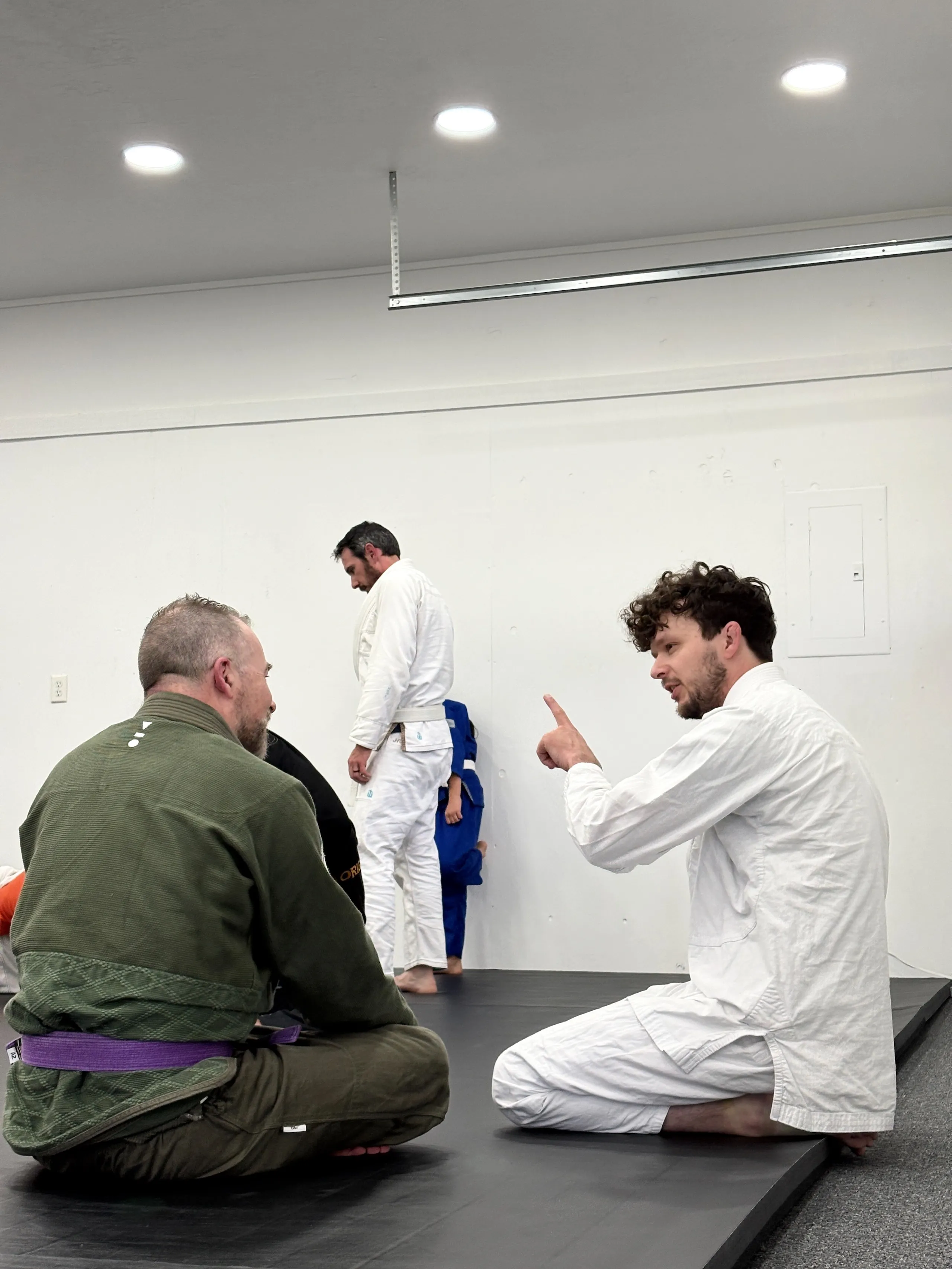
I’m Peter Hulce, a 2nd-degree black belt in Brazilian jiu jitsu.
When most people think about jiu jitsu, they think about techniques, submissions, conditioning, and competition.
Few things influence a training session more than a simple round timer.